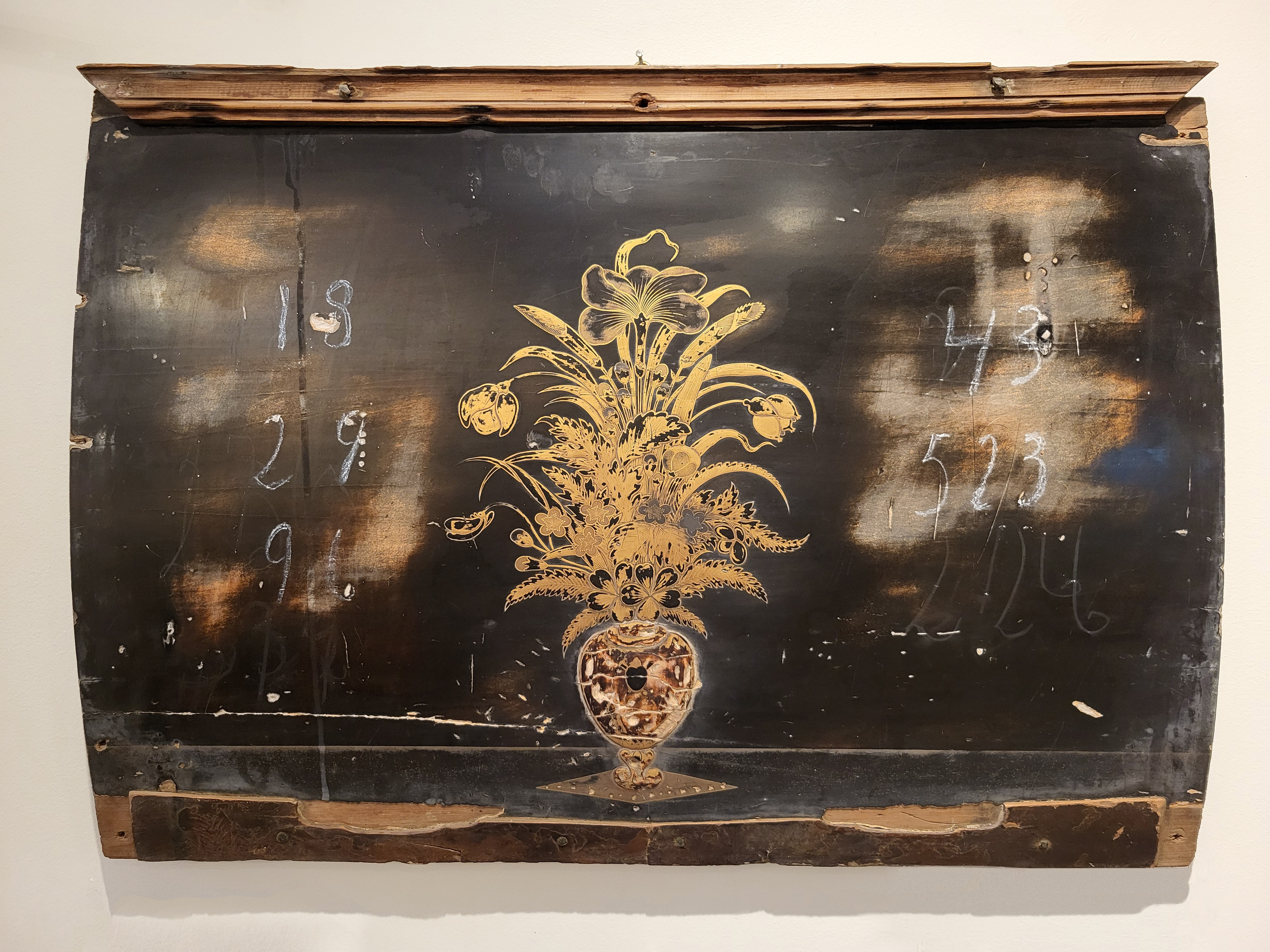
Credit: Skógar Museum.
Collecting or taking artefacts from Dutch East India Company shipwrecks or related sites is not a modern practice, as it has been occurring since these ships sailed the seas. In some cases, maritime salvage resulted in material from shipwreck sites entering local economies and their whereabouts today are untraceable. In other instances, these items have come into modern collections. Here I offer a story of one of these objects, a hymn board held by the Skógar Museum in Iceland, and the ship from which it came, Wapen van Amsterdam. I also reflect on the way salvage has similarly affected our ability to piece together evidence for the so-called ‘Deadwater wreck’ in Western Australia. In doing so, I offer a vignette into some of the ways in which salvage affects the lives of VOC objects and shipwrecks, and what we know about them. It also speaks to the fine lines between collection and destruction that continue to be relevant today.
A Hymn Board and a ‘Golden’ Ship in Iceland
Within the collections of the Skógar Museum, a folk museum in Iceland, is a simply decorated hymn board (R-1870). It was once used in some of the isolated churches on the volcanic island. It originated as the lid of a wooden chest on board the VOC ship Wapen van Amsterdam, and it is the only known item from that wrecked ship that I have been able to identify in modern collections.
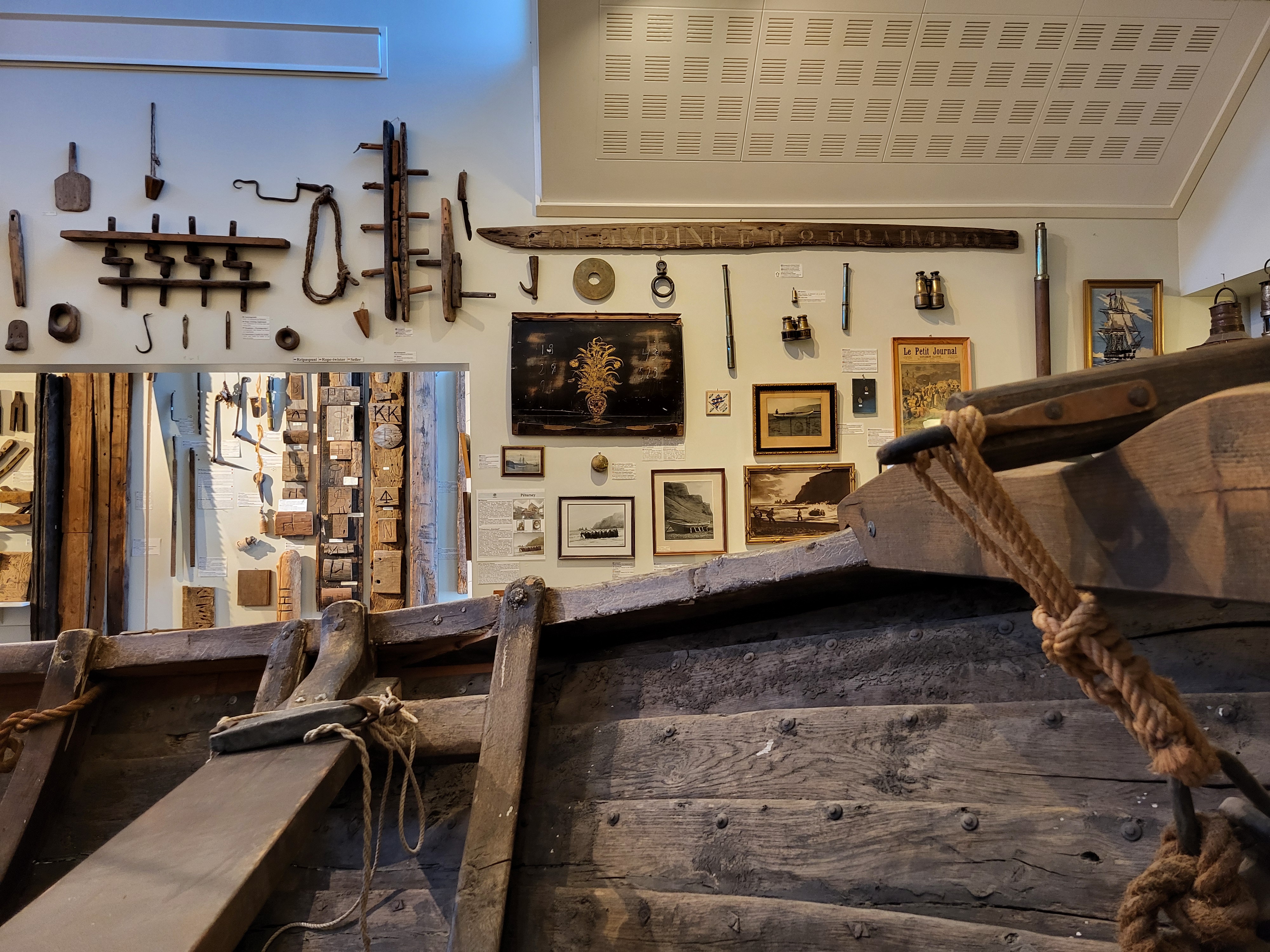
Credit: Skógar Museum.
The VOC ship Wapen van Amsterdam was wrecked on the southern coast of Iceland 19 September 1667 after being driven north by a fierce storm from the Shetland Islands. The fate of most of the cargo, and probably also the structure of the ship, can be considered as salvaged.
Maritime salvage is the practice of taking or repurposing material from wrecked ships. Many coastal communities have historically used salvage as a way of supplementing local economies, but it was also a tool wielded politically. In an era when multiple European nations were jostling for maritime dominance, the seizing or salvage of another nation’s vessels and/or cargo was a common act of commercial warfare, and local communities were encouraged not to assist the stranded vessels or foreigners but to seize the vessel or cargo and claim a ‘salvage fee’.
In the case of Wapen van Amsterdam an initial volume of items would have been rescued or salvaged by those that survived the wrecking of the ship. Tens of people are reported to have safely come ashore in a ship’s boat. The crew and any officers would have been involved in immediately securing those items of particular value to the VOC, such as the reported cargo of diamonds, just as skipper Jan Steijn secured the valuable cargo of specie (bullion in silver coins) from Zeewijk (1727) when it was wrecked on Western Australia’s Houtman Abrolhos.
Sadly, many of the survivors of the wreck of Wapen van Amsterdam succumbed to exposure, but 50 or so are also believed to have bartered with the local people to secure safe passage off the island, and eventually back to the Netherlands: there are stories told of farmers in Iceland sleeping on silk from the wreck. As the ship broke up, many items would have also been carried onto the coast as flotsam, and the wreck was apparently accessible at low tide. This would have made a myriad of items and the wrecked ship itself readily salvageable for any locals with patience enough to claim items of use, like the chest that became the Skógar Museum’s hymn board. In this way, some of the items from the wrecked ship entered the local economy and were used and repurposed.
But it was the Danish government that had legal control over the right of salvage, as Iceland at that time was part of the kingdom of Denmark. Similarly, when the VOC ship Kennemerland wrecked on the Out Skerries of Shetland, it was laid claim to by the English throne of Charles II—causing difficulties for the local Earl of Morton who had already started to salvage the ship. The VOC was able to negotiate diplomatically with the Danish, and the archives report the salvage and return of some items from Wapen van Amsterdam to the VOC, such as sealing wax, copper, tin, and silk (Bureau Hak 2020).
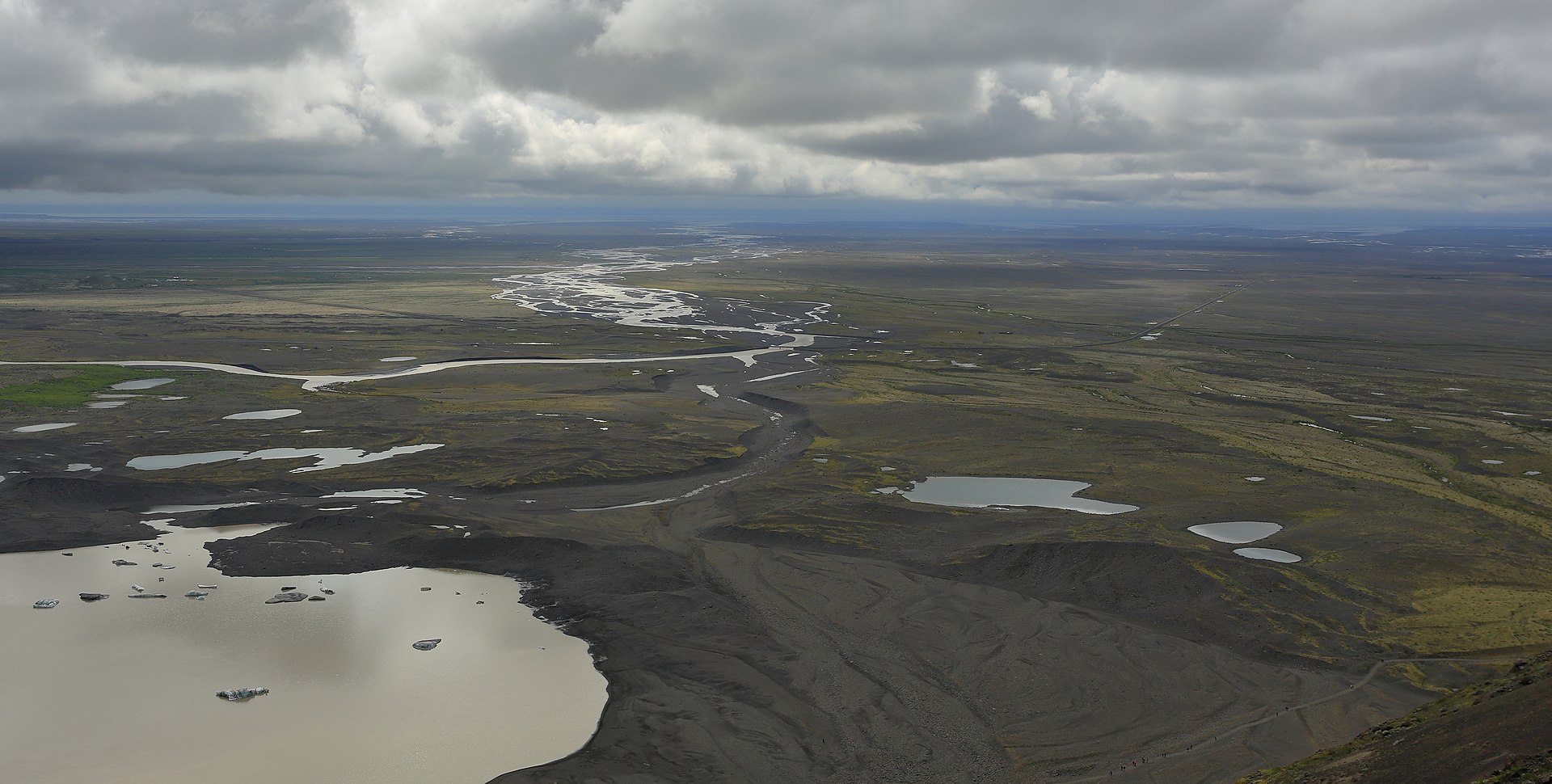
Credit: Martin Falbisoner, CC-BY-SA, Wikimedia Commons.
The wealth of the cargo of Wapen van Amsterdam’s is known to have been so rich that it was bestowed the name ‘the golden ship’ (Gullskipið in Iceland). The area it is known to have wrecked—Skeiðarársandur, a river delta of sand and glacial outwash on the southern coast of Iceland—continues to attract shipwreck hunters. None have yet found it. It is possible they never will because of the extent to which the wreck was salvaged historically, though a very underwhelmed shipwreck hunter did find a buried 20th century German trawler.
Salvage and Western Australia’s shipwrecks
In Western Australia we too have a history of maritime salvage. It can be considered a contributing factor in our ability to identify the so-called ‘Deadwater wreck’ in the south-west of Australia—a wreck once rumoured to have been a Dutch vessel. ‘Deadwater’ refers to the estuarine system at Wonnerup, just east of Busselton. An old wreck in this vicinity is referred to in some of the earliest accounts of colonial expansion into the area (Gerritsen 1995).
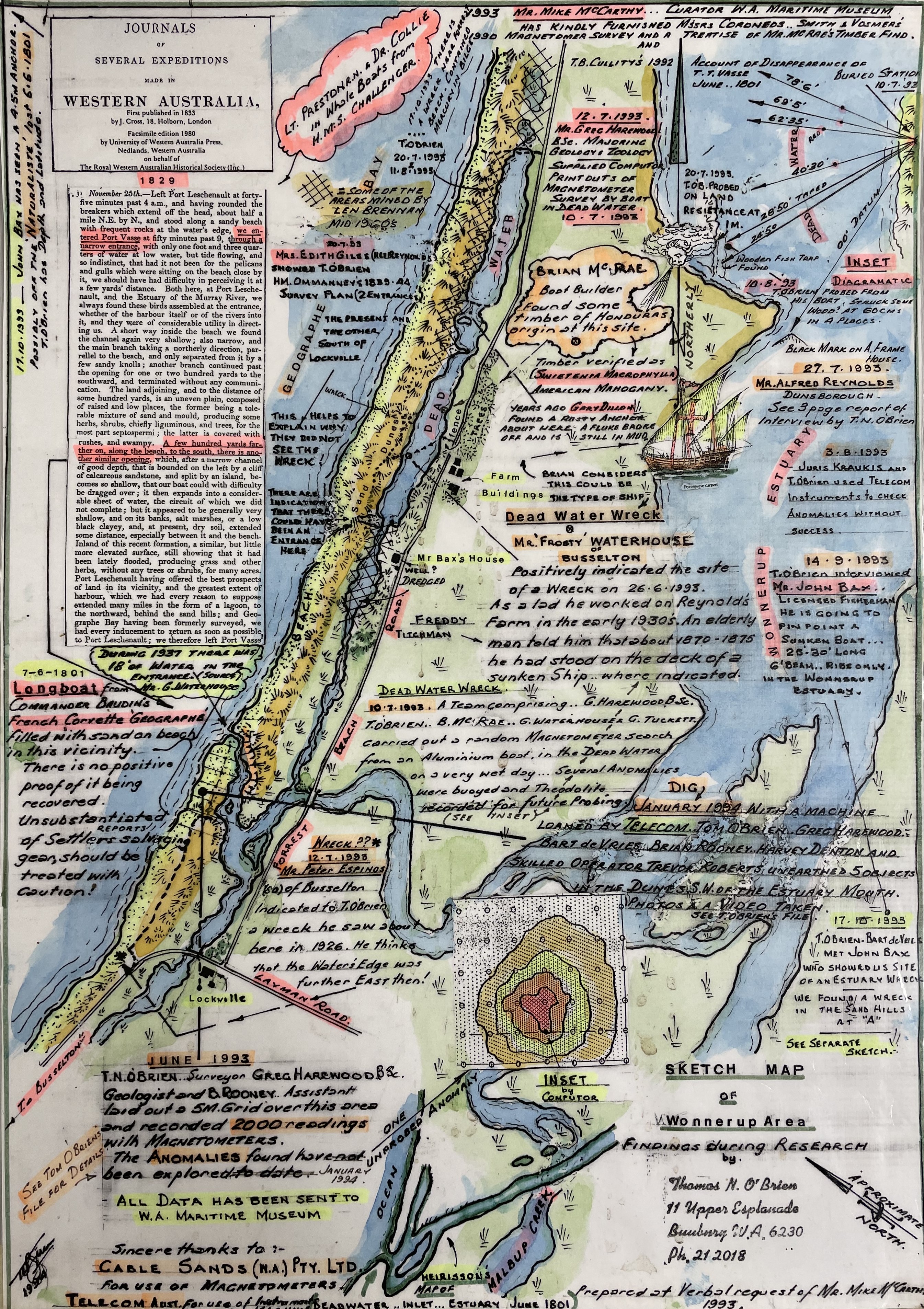
Credit: Busselton Historical Society (cwa-org-124-2021.39).
The early colonial administration in Western Australia had a position called ‘Receiver of Wrecks’—a role to which any known wreck should be reported and, if unclaimed, an individual could request the rights of salvage. The Colonial Secretary’s Office records held at the State Records Office holds a request from a Thomas Bindloss in 1876 to salvage the wreck, which was found to be ‘covered with water, sand and seaweed to the depth of about fourteen feet…’ (Gerritsen 1995:2–3). Subsequently in 1902 the landholder where the Deadwater is located, Joseph Reynolds, also applied for salvage rights. It is unknown to what extent either of these applications was acted upon, nor the extent to which items may have been taken before these applications, but a report in 1914 says that the ‘timbers have vanished completely into the “deadwater” and nothing was visible’ (Gerritsen 1995:35-39).
Maritime salvage is a practice indelibly linked to the history of shipwrecks across the world. It is one of the reasons that many shipwreck objects and the sites themselves may be untraceable, but also the reason that some collection items have survived and are available to us today—like the simple Hymn Board from Skógar Museum. Through looking closely at the object histories of these items, we can explore the close connections between collection and destruction.
Credit: Busselton Historical Society (cwa-org-124-2020.457).
There are several other possibilities, including natural processes, that could have contributed to the erasure of the Deadwater wreck's visibility over time—these have been methodically laid out by Maritime Historian Rupert Gerritsen. There has been no credible evidence for the wreck found since the mid-20th century. The Deadwater wreck and that of Wapen van Amsterdam are very similar in this respect. As our ability to properly find and identify the wrecks has been compromised, not least by salvage, research has had to rely upon consultation with the available historical source material to piece together what might have occurred at these sites. Despite very thorough research concluding that it was insupportable to consider the Deadwater wreck a Dutch ship, the theory continues to circulate, and the Deadwater wreck remains a popular myth. Likewise, shipwreck hunters continue to look for the remains of the ship Wapen van Amsterdam and its ‘golden’ cargo despite evidence that it was subject to historical salvage. Valued historically for their immediate economic value, the enduring fascination and pursuit to find these wrecks demonstrates that we also value the stories connected to them.
Note: Today in Australia, maritime archaeological sites are protected under both Commonwealth and State legislation. These laws protect sites from all kinds of salvage, such as commercial or personal souveniring, to preserve them for future generations. Any artefacts that have come to be in private possession must be registered with the Australian government: you can apply for permits online. Please see the WA Museum’s ‘Protection of Maritime Archaeological Sites’ website for more information.
References
A hymn board from the golden ship. Skógasafn Museum, accessed 13 August 2024.
Bureau Hak. (2020) Wapen van Amsterdam. A history. Report commissioned by The Cultural Heritage Agency of the Netherlands.
‘Deadwater – Shipwreck Site’, inHerit. Our Heritage Places. Heritage Council, accessed 20 October 2025.
Gaitens JA (2022) ‘Treasure Ísland. Jón Ársæll’s latest work documents a 60-year search for gold’, The Reykjavík Grapevine 23(4):22.
Gerritsen R (1995) An Historical Analysis of wrecks in the vicinity of the Deadwater, Wonnerup, Western Australia. Department of Maritime Archaeology Reports No. 97. Western Australian Museum.
‘Gullskipið strandaði 1667’ (2020) Eldsveitir, accessed 30 September 2025.
Henderson G (2007) Unfinished voyages: Western Australian shipwrecks 1622–1850, 2nd ed, University of Western Australia Press, Crawley, W.A.
‘Mission Story’, Anno 1667, accessed 26 September 2025.