Credit: Western Australian Museum, Department of Maritime Heritage.
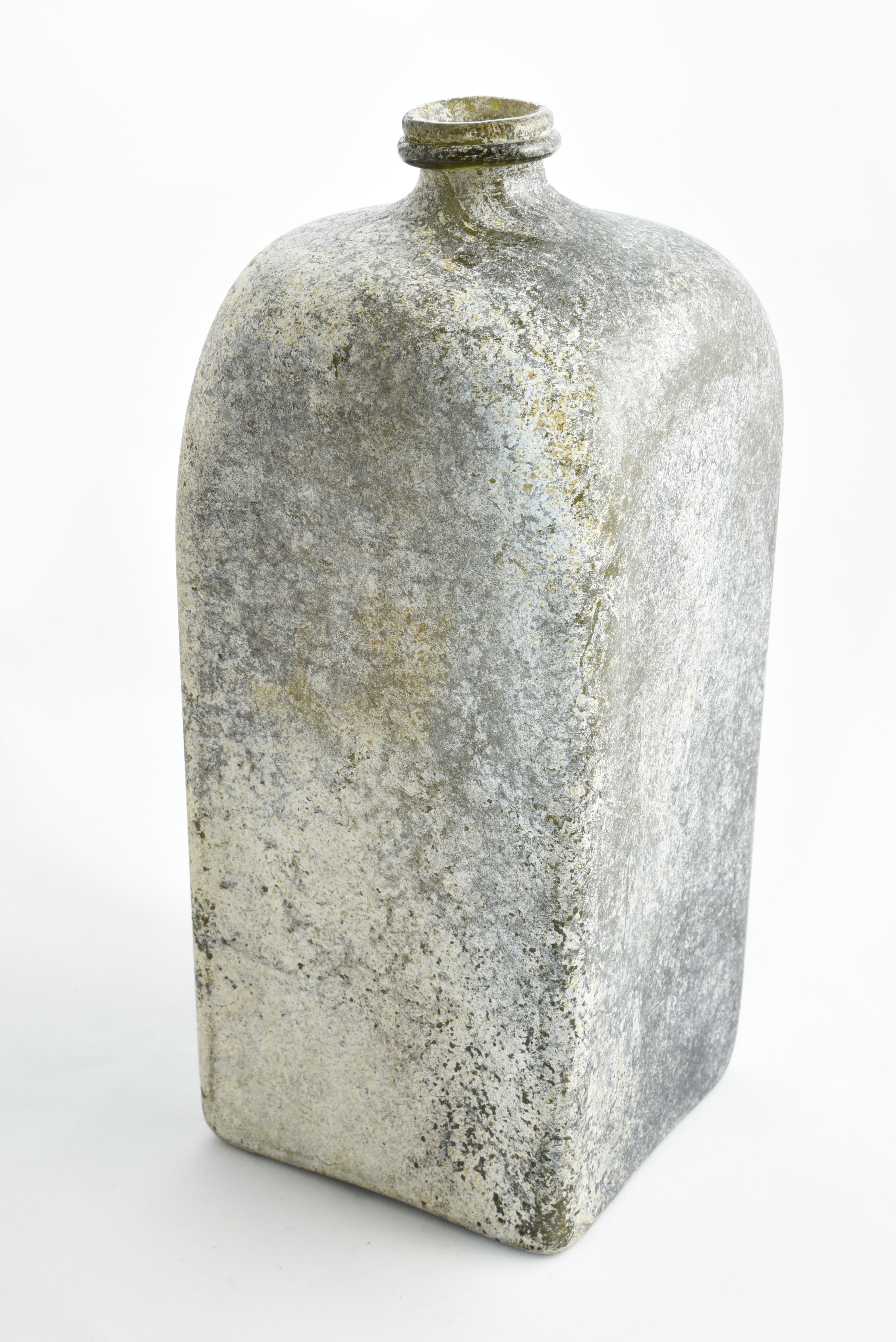
This flat-sided, moulded bottle of green glass was one of many objects found in the late 19th century by Guano miners on islands in the Pelsaert Group of the Houtman Abrolhos—most likely Gun Island.
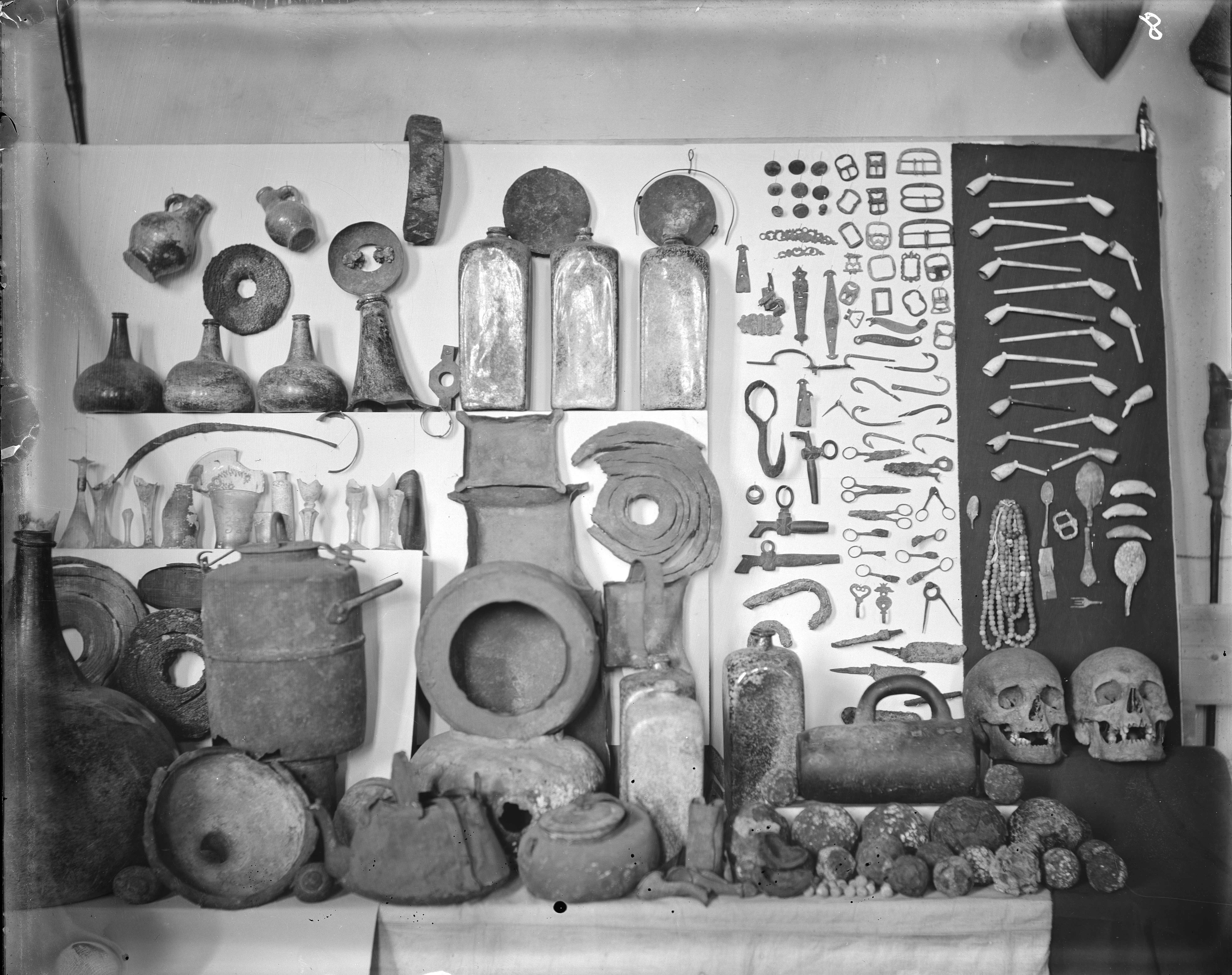
The bottle was probably taken to Gun Island by survivors of the VOC ship Zeewijk which wrecked along the Half Moon Reef in 1727. They lived on the island for several months, during which time they were able to transfer most of the supplies and cargo from the ship to the several ‘messes’ (spaces where groups ate together) they established. This, and many other items were left on the island when the survivors successfully departed for Batavia (modern day Jakarta) on a small ship—sloop—they built themselves from the salvaged remains of Zeewijk. The Broadhurst family, which held the lease for mining the islands of the Pelsaert Group of the Houtman Abrolhos, carefully collected many items found during their mining operations. This collection was one of the earliest acquired by the precursor of the Western Australian Museum, the Perth Museum, and is now part of the wider collection of VOC shipwreck material held.
Credit: Courtesy Western Australian Museum, Department of Maritime Heritage.
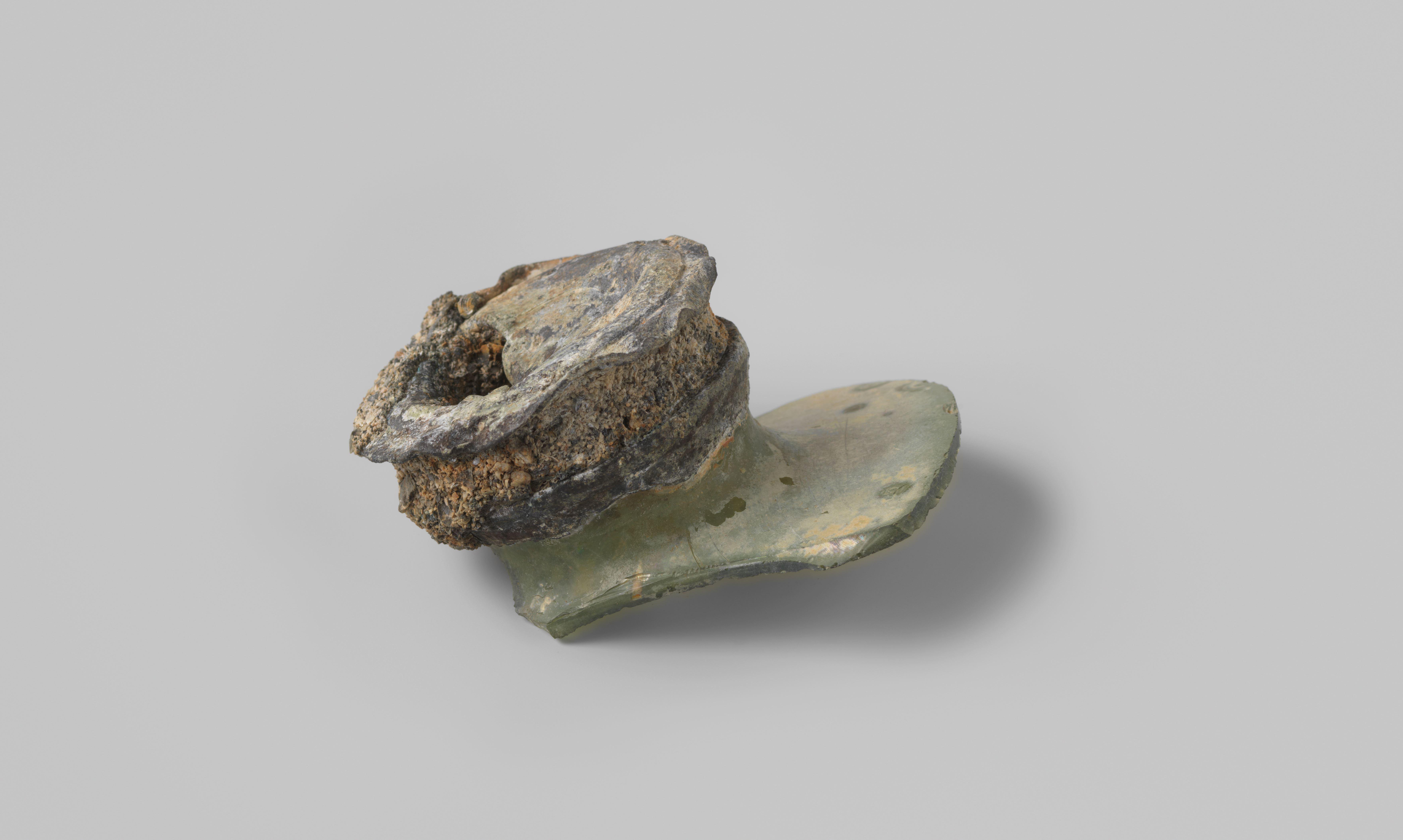
This type of bottle is more commonly known as a ‘case bottle’ or, in Dutch, kelderfles. This name derives from the fact these bottles were designed to be transported and stored in cases. The glass was blown into a standard squared mould to achieve the shape and size required. From its measurements, we can tell this bottle could have held approximately half a gallon of liquid (c. 2.25 litres). The slight concavity of the sides of the large bottles is caused by the glass sagging under its own weight as it cooled. The bottle would have once been sealed with a tin or pewter cap: note this example from a similarly dated wreck held in the Rijksmuseum.
Credit: Rijksmuseum, Amsterdam.
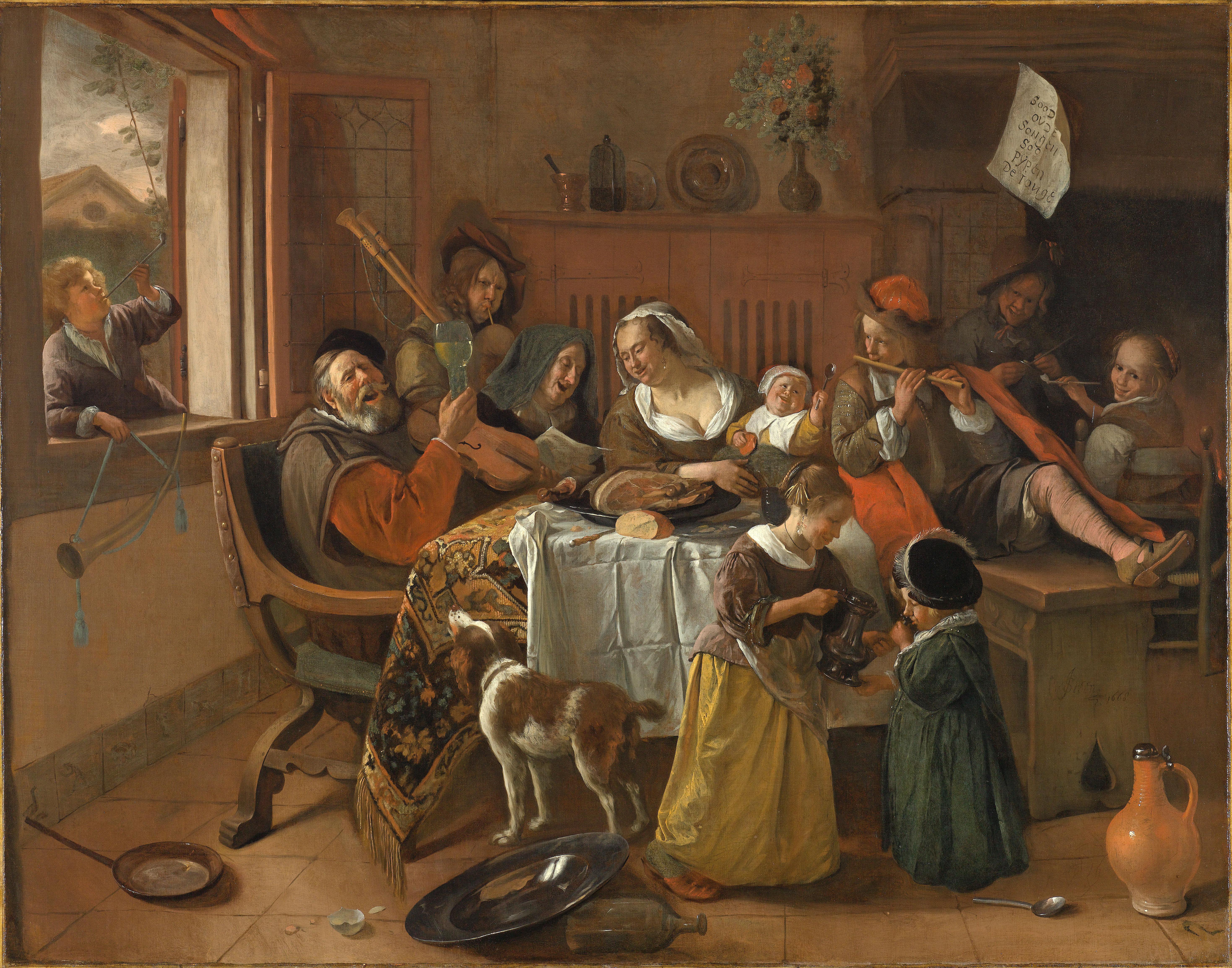
Case bottles were used for wine and liquors in the 17th and 18th centuries in both the household and in transport and storage. Note in the painting Het vrolijke huisgezin [The Merry Family] (Jan Havicksz Steen 1668) a case bottle on the shelf behind the family can be seen half full of a dark liquid. A case bottle with a longer neck than that from the Zeewijk wreck lies empty on the floor, its contents, likely wine, probably decanted into the jug held by the young girl. Note also the stoneware jug in the bottom right—another vessel also commonly found on VOC shipwrecks.
Credit: Rijksmuseum, Amsterdam.
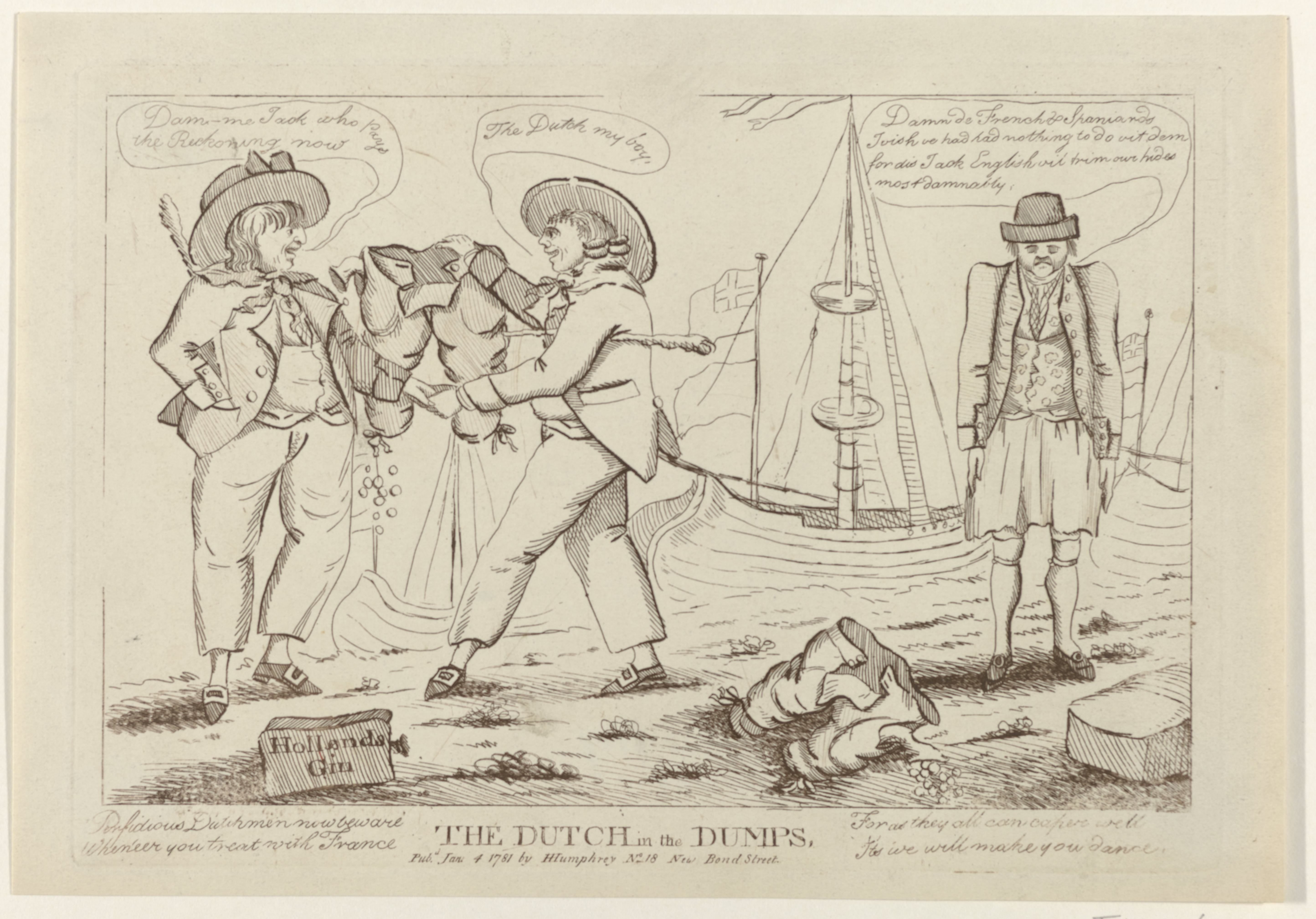
On ships, this style of case bottle is commonly associated with gin: they were bestowed the name ‘Dutch gin bottle’ due to their use to store and transport large quantities of gin onboard Dutch ships. This was because gin, or jenever, was believed to have medicinal properties and a ration was given to mariners to maintain good health (McNulty 1971). This development only seems to have come about over the course of the 18th century, with brandy previously the more commonly issued strong spirit on Dutch vessels (Jarvis 2023). Therefore, while gin was one of the many forms of liquor Dutch mariners were famous for generously imbibing (note this English cartoon from the late 18th century), it should not be assumed that large quantities of gin would have been on board Zeewijk which wrecked in 1727. Moreover, the journals that we have from the wrecking of Zeewijk refer to the sharing out of wine, brandy, and even rum, but not gin. It is, therefore, likely that the bottles did transport a form of alcohol but the association with gin in this instance is not likely.
Credit: Rijksmuseum, Amsterdam.
Once emptied of liquor, it is possible that this vessel from Zeewijk was reused to store water. Access to water was paramount for survival while stranded in the Houtman Abrolhos islands. Care for any vessels that could maintain a local store of this precious resource may explain why these glass bottles remained intact.
References
Ingelman-Sundberg C (1978) Relics from the Dutch East Indiaman, Zeewijk, foundered in 1727, Western Australian Museum Special Publication 10, Western Australian Museum, Perth. Accessed 13 November 2025.
Jarvis C (2023) ‘High seas and hard drinks: Alcohol rations on Dutch vessels,’ International Journal of Maritime History 35(3): 393-409.
McNulty RH (1971) ‘Common beverage bottles: their production, use, and form in seventeenth and eighteenth-century Netherlands: part 1,’ Journal of Glass Studies 13:91–119.