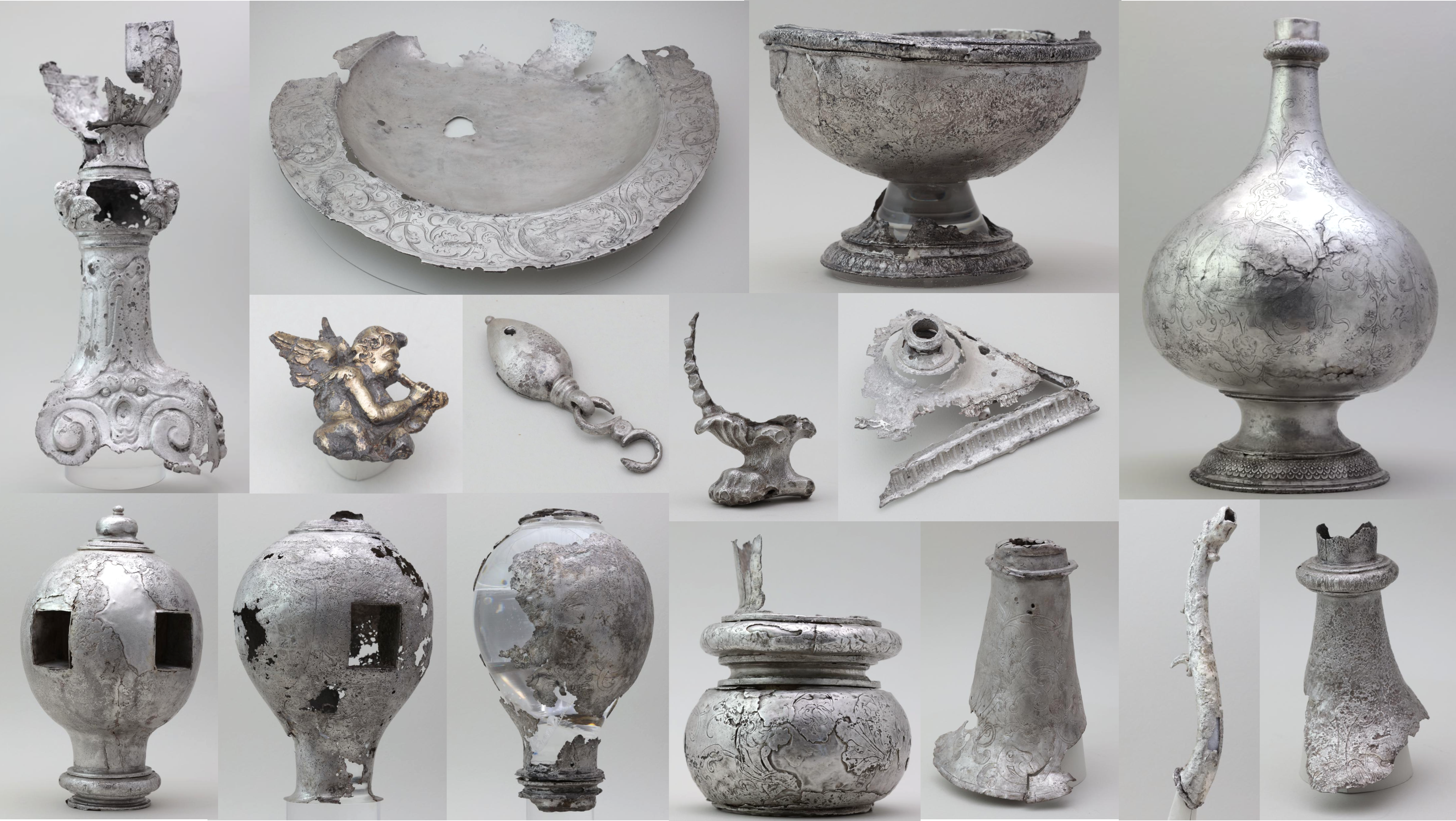
Overview of the more complete objects in the collection
Credit: Rob Erdmann and Tamar Davidowitz, courtesy of the Western Australian Museum
Building on previous archaeological and art historical research, an ongoing material study at the Rijksmuseum in Amsterdam and the WA Shipwrecks Museum has shed new light on a remarkable collection of 17th-century silver recovered from one of the most infamous shipwrecks in maritime history, Batavia, which sank off the coast of Western Australia in 1629. Originally commissioned by the Dutch East India Company (VOC), these silver objects were intended to help open a lucrative market for European precious-metal goods in Mughal India. The collection currently consists of a variety of object types: vessels, furniture ornaments, tableware, detached decorative elements, and other fragments. They are tangible reminders of an intense period of global trade and cross-cultural exchange, but centuries underwater, followed by excavation and restoration, has significantly transformed them. This means that interpreting the objects as they are now requires careful attention to every phase of their biography: manufacture, submersion, excavation, and restoration.
Manufacture
The production of these objects began with the ambitions of the merchant, and commander of Batavia, Francisco Pelsaert, who commissioned them from silversmiths in Amsterdam on behalf of the VOC. The silversmiths, working under strict time and stylistic constraints, used inventive strategies and techniques to adapt to the situation. This can be seen in the surviving objects and reveals both the pressures faced by, and the ingenuity of, their makers.
Submersion and Excavation
The sea is unforgiving toward metal, including silver alloys. Over the course of hundreds of years, saltwater, shifting sediments, and marine life altered and corroded these delicate works, obscuring many details of their original craftsmanship. By the time of excavation, the objects were severely deformed, corroded, and fragmented.
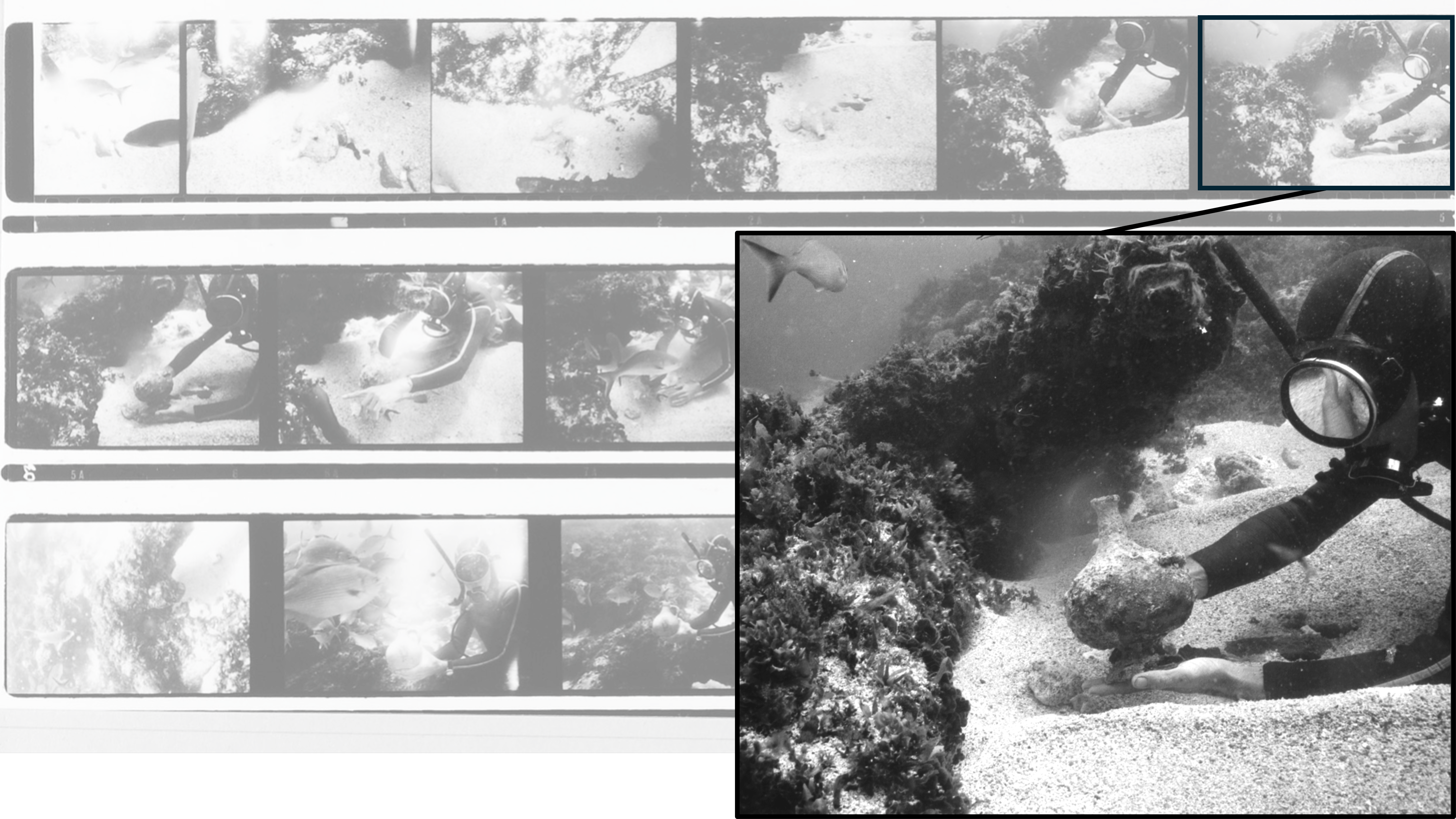
Recovery of silver objects from the Batavia shipwreck
Credit: Western Australian Museum, Department of Maritime Heritage
Restoration
In the 1970s, the objects were heavily reconstructed using silversmithing techniques such as etching, brazing, annealing, and raising. While these interventions were intended to help preserve and exhibit the objects, they also introduced new materials and permanently altered their original physical and chemical properties. In some cases, fragments also became disassociated from one another, further complicating their interpretation and the ability to distinguish what is authentic from later repairs. This, in turn, led to misinterpretations of their original form and function.
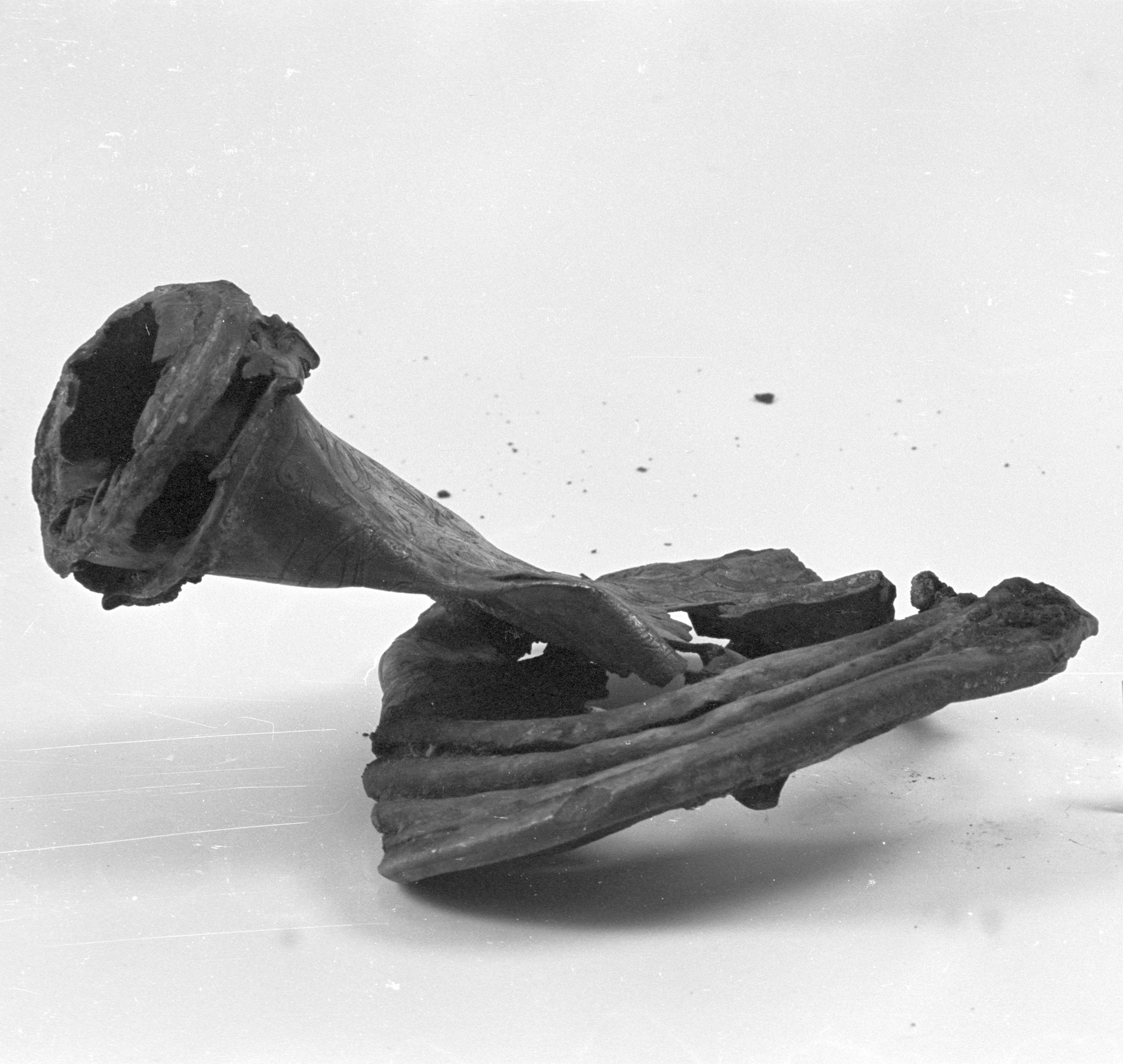
Object BAT3563 before reconstruction.
Credit: Western Australian Museum, Department of Maritime Heritage
Object BAT3563 after reconstruction. Note, by comparing with the previous image, the degree of intervention the object has undergone.
Credit: Rob Erdmann and Tamar Davidowitz.
Interpreting the material
The aim of this materials-based approach has been to disentangle the phases of intervention so that the objects—and ultimately the craftspeople who created—them can tell their intended story. Focus on the artefacts themselves has allowed for a deeper understanding of the context in which they were made, as well as the dramatic transformations they have undergone. Examining the material in this way also lays an empirical groundwork for future analysis and interpretation, giving us a fuller grasp on the complex narratives embedded in these objects.
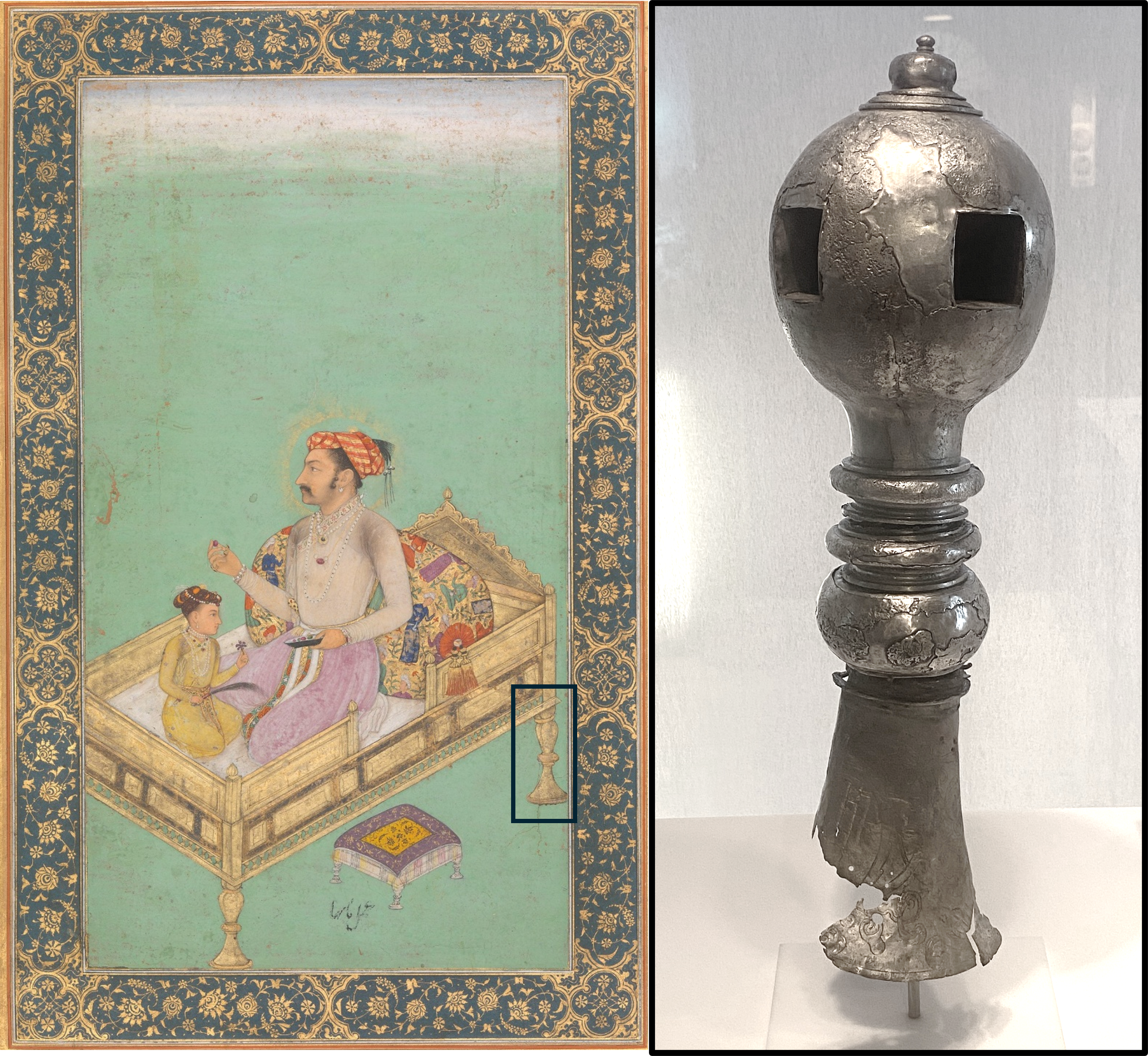
Previously disassociated and misinterpreted objects discovered to belong together to form the foot of a katel
Credit: L: The Emperor Shah Jahan with his Son Dara Shikoh, Nanha (detail), Shah Jahan Album, c. 1620, Metropolitan Museum of Art, inv. 55.121.10.36. R: Western Australian Museum, Department of Maritime Heritage.
New insights
The initial phase of analysis has already yielded significant reinterpretations of many objects within the Batavia silver collection. These insights have been incorporated into the new display at the WA Shipwrecks Museum in Fremantle, including interactive 3D renderings of the objects. Ongoing research continues to connect these material observations with contemporary manufacturing practice and the historical record, aiming to situate the Batavia silver within broader patterns of VOC trade, global artistic exchange, and early modern craftsmanship. The outcomes of this integrated investigation will be presented in forthcoming publications.