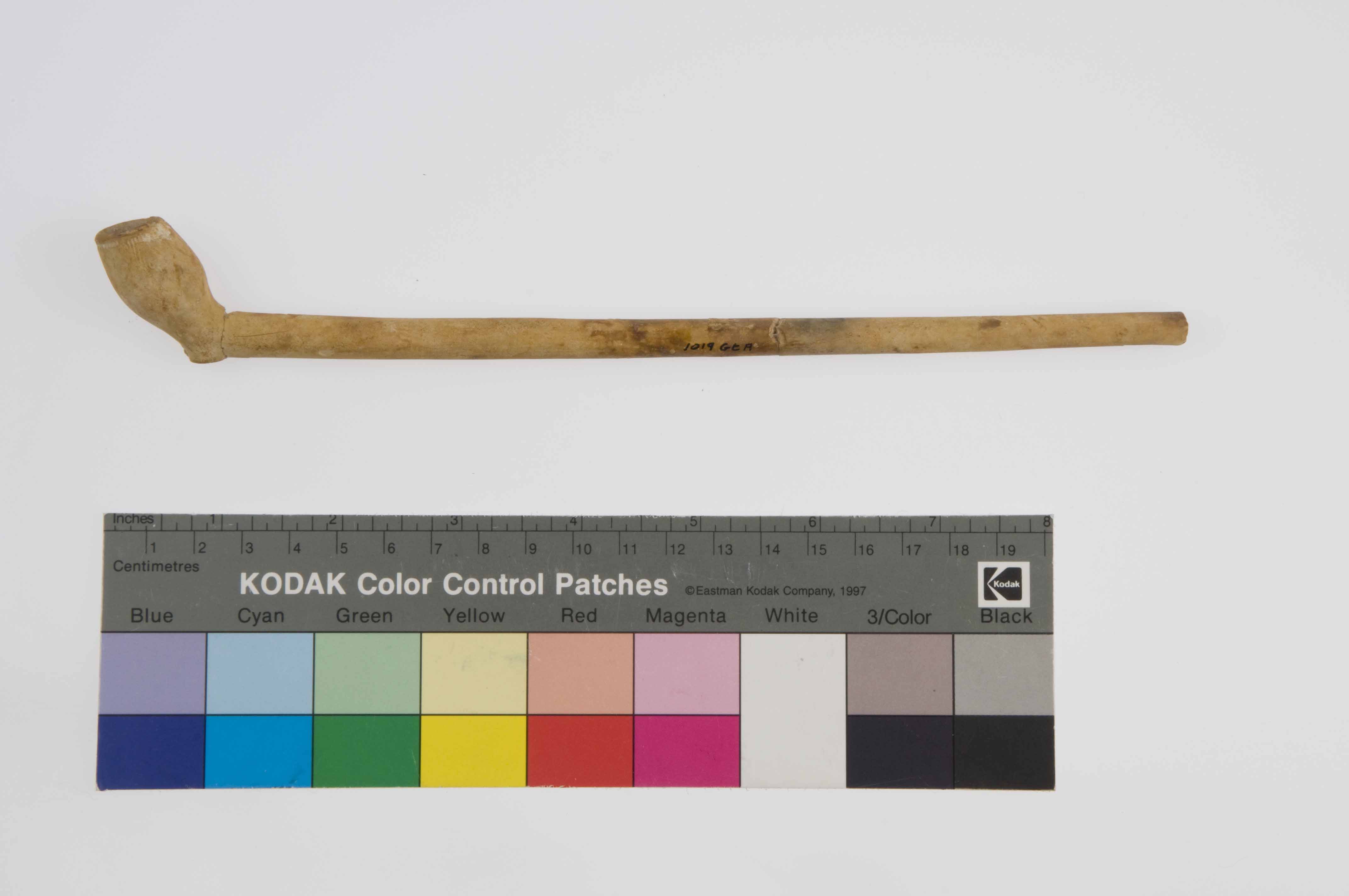
Whitish clay pipes, like this example from the Western Australian Museum (GT1019), have a long narrow stem. The pipe bowls are sometimes decorated at the rim, for example with a rouletting, and they often include a marker’s mark, eg 'CT'.
Credit: Western Australian Museum, Department of Maritime Heritage
The numerous, but rather unassuming, tobacco clay pipes from the wreck of the VOC ship Vergulde Draeck (1656), such as GT1019 from the Western Australian Museum, allow a fascinating insight into the global world of the VOC in the Indian Ocean and beyond . The pipes embody the vast interconnectedness and mobilities of people, objects, and cultural practices in the early modern colonial world. Clay pipes were not only found on Vergulde Draeck, but indeed on almost all VOC shipwrecks we know of. Clay pipes are also found in archaeological sites of maritime ports of the early modern period which Dutch ships frequented, such as the Baltic cities, and they are a staple object in most maritime museums. Tobacco pipes were thus a very common object in the early modern world.
Tobacco cultivation in the Americas
But we must start with tobacco. The tobacco plant is indigenous to the Americas and was cultivated by many different indigenous groups in South, Middle and North America long before any Europeans arrived. The local use of tobacco plants was quickly adapted by the Spanish, Portuguese and later also by the Dutch and English. Tobacco plants were introduced to the French court in the 16th century by a French explorer who discovered it at the St Lawrence River in North America. The plant was first introduced as a medicinal and exotic plant to the leading European courts, including that of Marie de Medici and the English court of Elizabeth I. But the fast and wide-spread mass consumption of tobacco was linked to seafaring communities and later to soldiers in the Thirty Years War in Europe (1618-1648).
Europeans soon identified tobacco as a very profitable cash crop, along with sugar and cotton. Profits from the sale of tobacco in Europe was so high for European merchants, that the supply by indigenous growers was not sufficient, and production was scaled up in the plantation system in the 17th century. In 1613 more than 400,000 pounds of tobacco were shipped officially to Seville from Spanish colonies in the Americas. Equally, the newly established English slave colony of Virginia became a centre for tobacco plantation, which also dominated sales in Amsterdam (Lemire 2021).
Dutch social commentaries noted critically how the habit of tobacco smoking had infiltrated especially lower social classes, including beggars. Dutch paintings of the seventeenth and eighteenth centuries did not only depict tobacco pipes as part of exotic still life, but equally as a component of apparent dissolute peasant life and taverns, with many genre paintings depicting men, women, and even children smoking clay tobacco pipes while also excessively consuming alcohol amongst general mayhem.
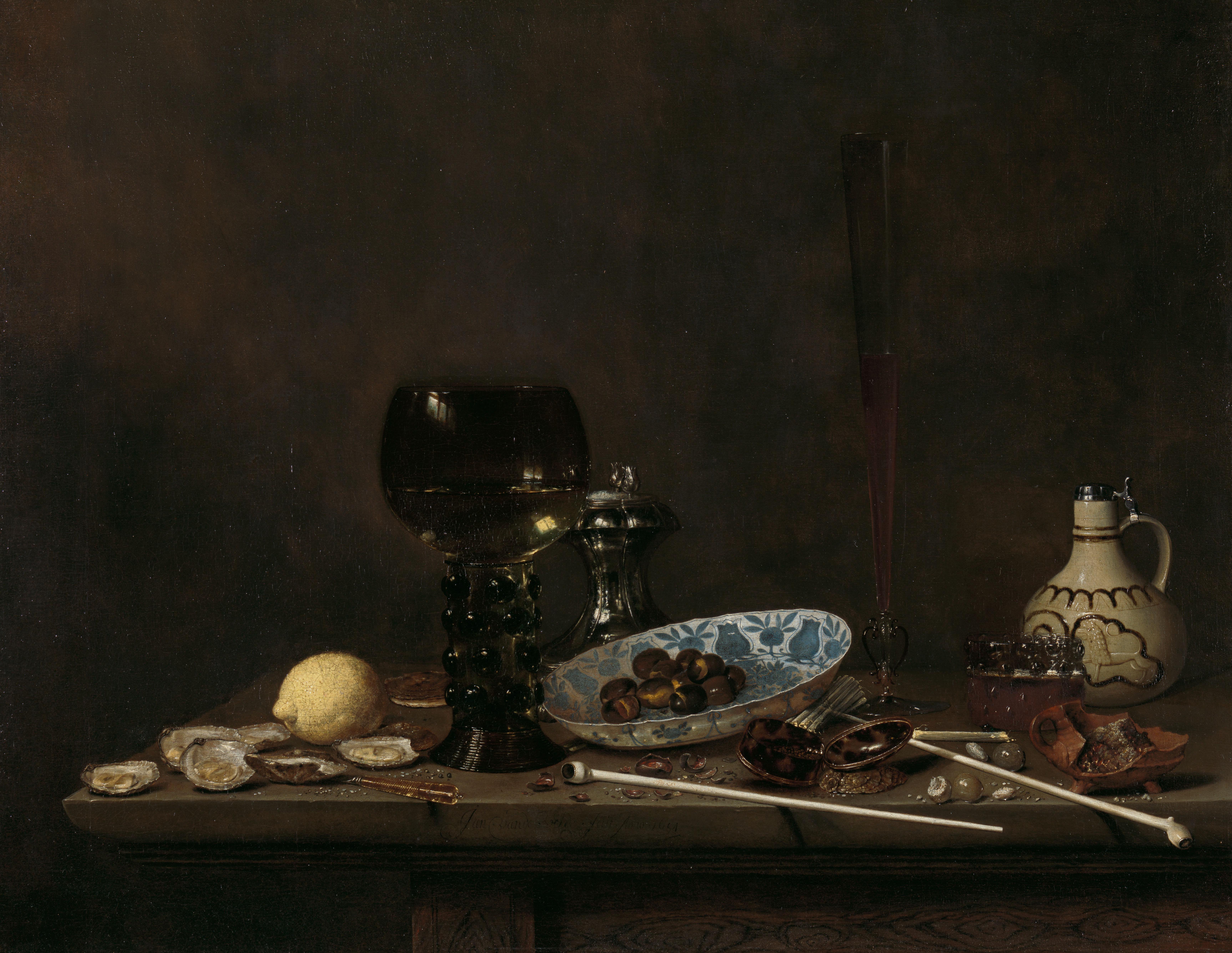
Still Life with Roemer, Salt Cellar, Tobacco, Lemon and Olives, Jan Jansz. van de Velde (III), 1651 (SK-A-3988).
Credit: Rijksmuseum, Amsterdam
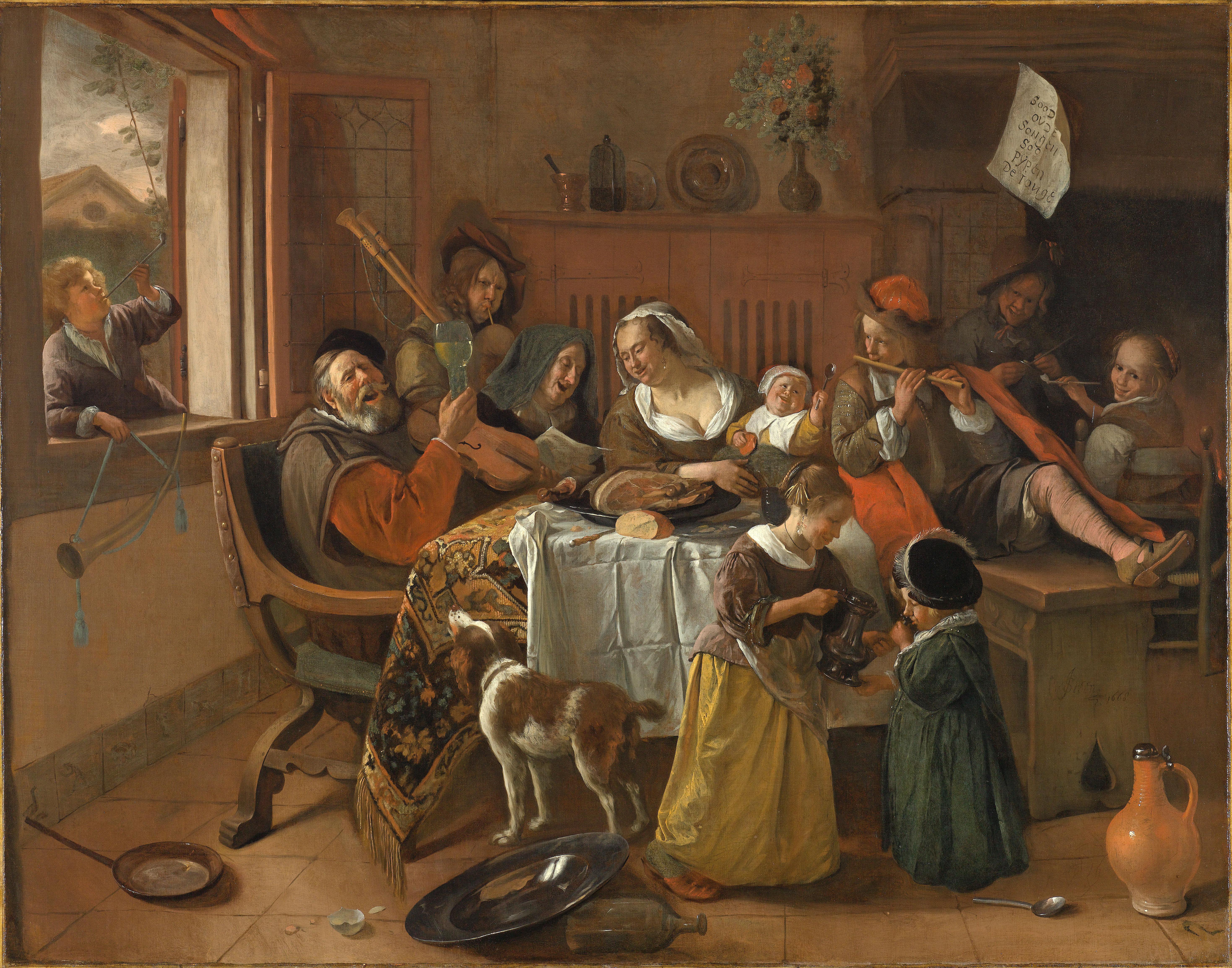
Painting Het vrolijke huisgezin [The Merry Family], Jan Havicksz Steen, 1668 (SK-C-229).
Credit: Rijksmuseum, Amsterdam
Tobacco pipe production in Europe
Tobacco pipe production in Europe is documented from the 1570s onwards, when pipe workshops opened in England in ports like Bristol and Chester. A pipe-making oven was even part of the colonial English settlement at Jamestown, Virginia, in 1607. English migrants introduced clay pipe making to the Netherlands, and in the early 1600s most of the pipe makers in Amsterdam were Englishmen. Soon the city of Gouda became an important and expanding pipe-making centre. For example, in 1665 the pipe makers’ guild had 80 members, and by 1730 it had 611. Each of these pipe makers produced ca 1,000-1,500 pipes per day (Lemire 2021). As a cheap and mass-produced item, the decorations on pipes did not reflect their individual owners, but instead their makers and places of production.
Tobacco clay pipes in the other Dutch colonies
VOC employees also carried the habit of tobacco smoking, and the tobacco pipe, to other trading ports in Africa and Asia. In South Africa, the imported tobacco was used to trade with, or pay, local Khoikhoi people and led subsequently to a nicotine addiction amongst them. VOC officials and traders used the tobacco dependency of Khoikhoi groups to achieve not only coerced labour but also numerous unfair trade advantages from them. This was systematically exploited by the Dutch in bartering urgently needed fresh meat from Khoikhoi communities. All legal (and illegal) Dutch purchase of sheep and cattle from the Khoikhoi involved brass and tobacco, as the daily entries of VOC commanders at the Cape of Good Hope amply demonstrate (Moodie 1960).
Tobacco clay pipes and smoking in Batavia
Batavia was the headquarters of the Dutch VOC governance and trade in Asia, and the centre of a colonial network including Dutch VOC ports in Sri Lanka, Bengal, Madras, Malacca, Japan or Taiwan. In Batavia, goods for European employees coming from the Netherlands were also distributed. Vergulde Draeck had been on its way to Batavia, before it wrecked at the WA coast. The many clay pipes onboard the ship were destined for sale in Batavia, and possibly to other VOC ports in Asia.
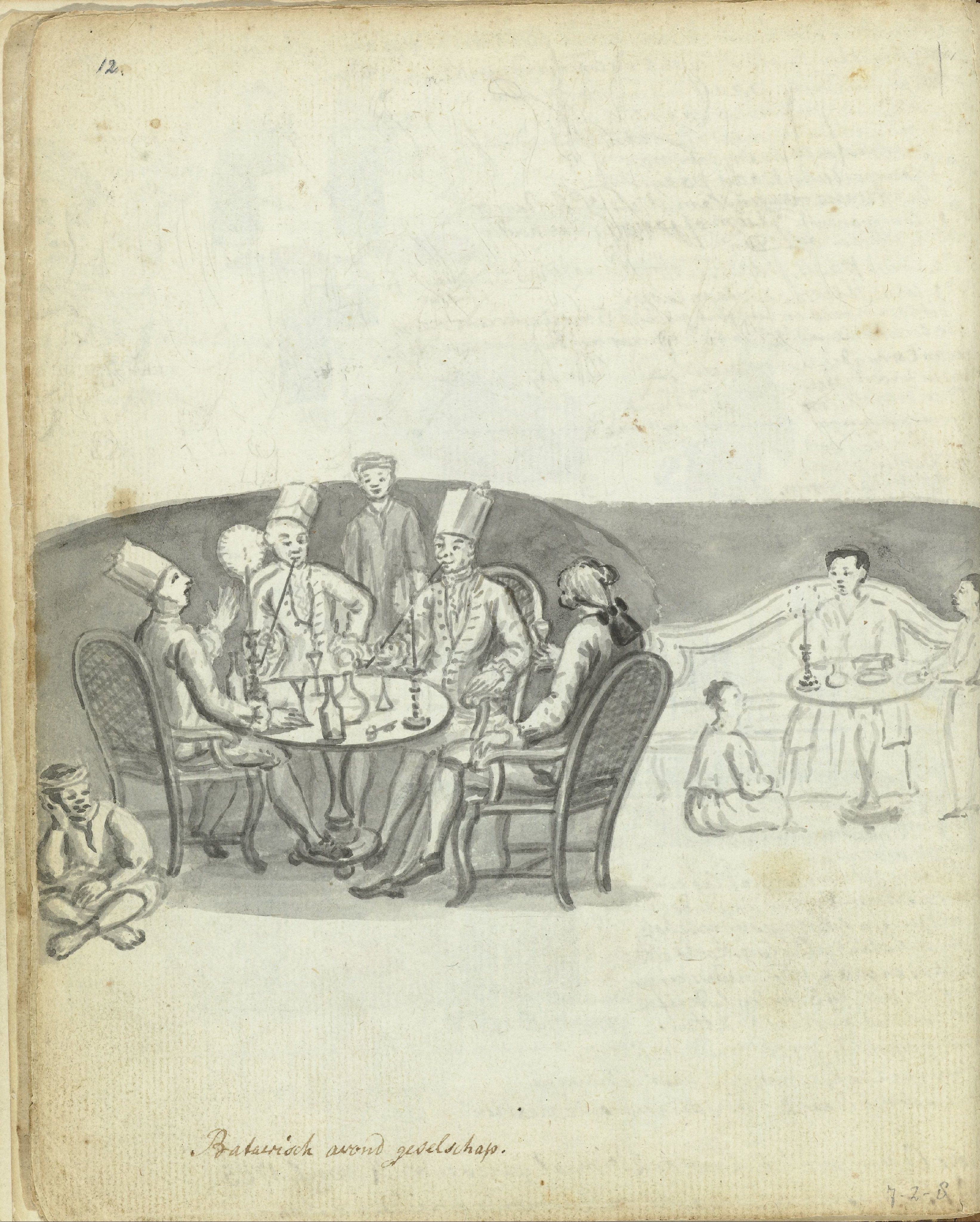
Batavisch avondgezelschap [Evening society in Batavia], Jan Brandes (NG-1985-7-2-8).
Credit: Rijksmuseum, Amsterdam
While the tobacco pipes themselves were on the whole sparsely decorated and differed only in small details, wealthy owners could use the object to indicate their high status by storing their pipes in opulent pipe casks made of expensive material such as ivory which could be sourced via VOC trade connections in Sri Lanka.
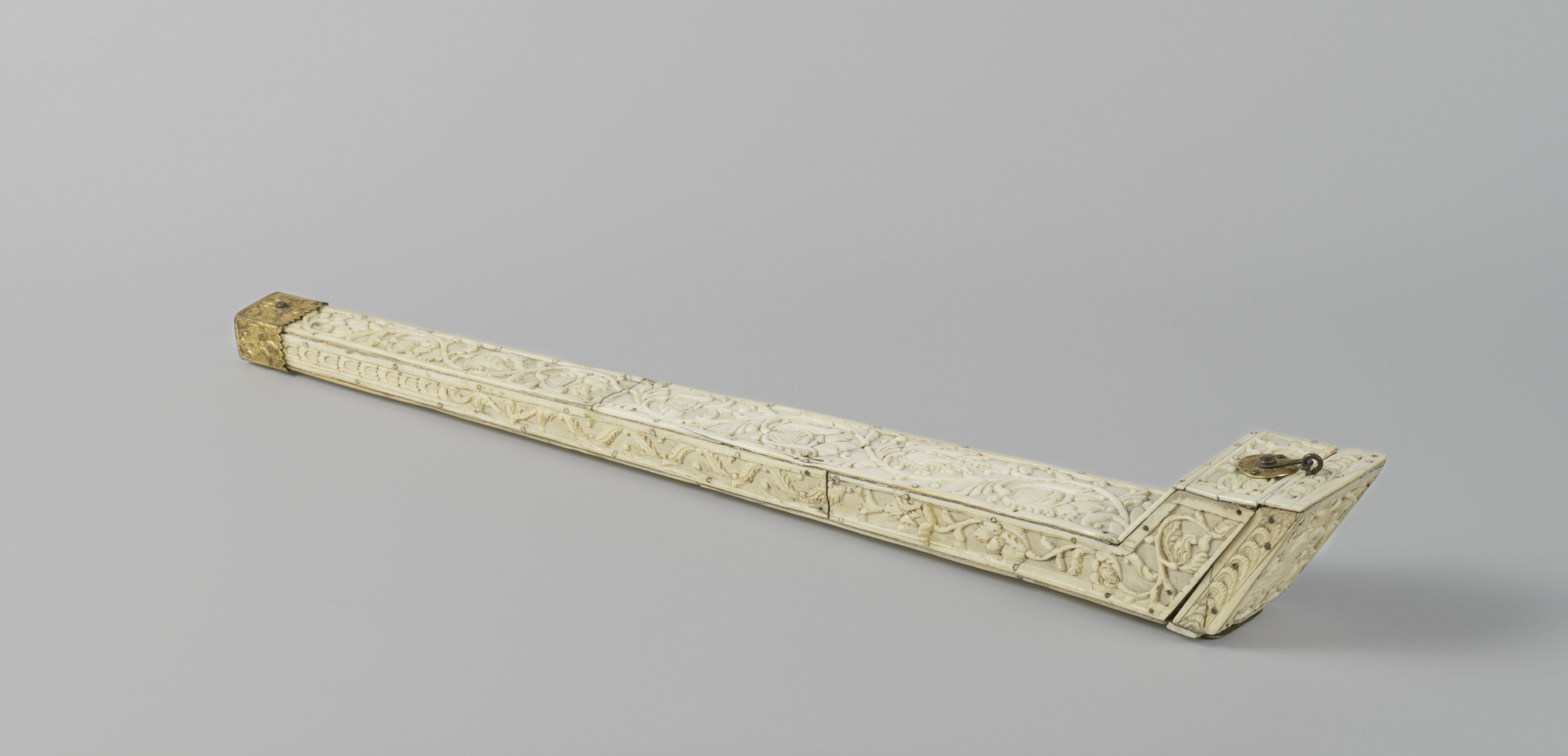
Ivory case for a pipe (NG-453)
Credit: Rijksmuseum, Amsterdam
But did everyone in Batavia smoke clay pipes? While the use of tobacco pipes in the Netherlands is documented for all social groups and both sexes, the situation in colonial Batavia was tellingly different. Here the consumption of tobacco, and other narcotics, was strongly delineated by different cultural habits which also determined the use of the clay pipe.
Batavia was a multi-ethnic society; the few European VOC employees depended on a large economic network in order to operate the VOC headquarters in Indonesia. Dutch rule relied on the work force of Chinese immigrants, Balinese slaves, and other former slaves, also called Mardijkers. All these communities displayed distinct cultural differences in their choices of tobacco consumption. Mardijkers, who were the descendants of free slaves and who had been in contact with the Portuguese (for example at the former Portuguese-occupied port of Malacca), had adopted the Portuguese way of smoking tobacco in form of cigars.
Conclusion
Dutch clay tobacco pipes became an everyday item in the Netherlands but spread globally very quickly. These pipes were truly global objects that embodied the European colonial networks. They reflected a multitude of historical, social, and cultural encounters starting with the cultivation of tobacco plants in the Americas, then crossing the Atlantic into Europe and finally VOC ship crews and Dutch officials introduced them to the trading ports in Africa and Asia. These small and cheap pipes tell many stories about addiction, coerced labour, trade, socialisation, and cultural adaptations. European slavery and tobacco plantation economies in the Americas, English pipe making skills and booming Dutch pipe guilds are as much part of these stories as coerced labour on VOC ships and ports, addiction to European-introduced substances, and Sri Lankan ivory carvers who turned their admirable skill toward making expensive pipe cases that served as social status objects for Europeans.
References
Lemire B (2021) ‘Material Technologies of Empire: The Tobacco Pipe in Early Modern Landscapes of Exchange in the Atlantic World’, MAVCOR journal 5(1), 10.22332/mav.ess.2021.4.
Moodie D (ed) (1960) The record: or, A series of papers relative to the condition and treatment of the native tribes of South Africa, A.A. Balkema, Amsterdam and Cape Town.