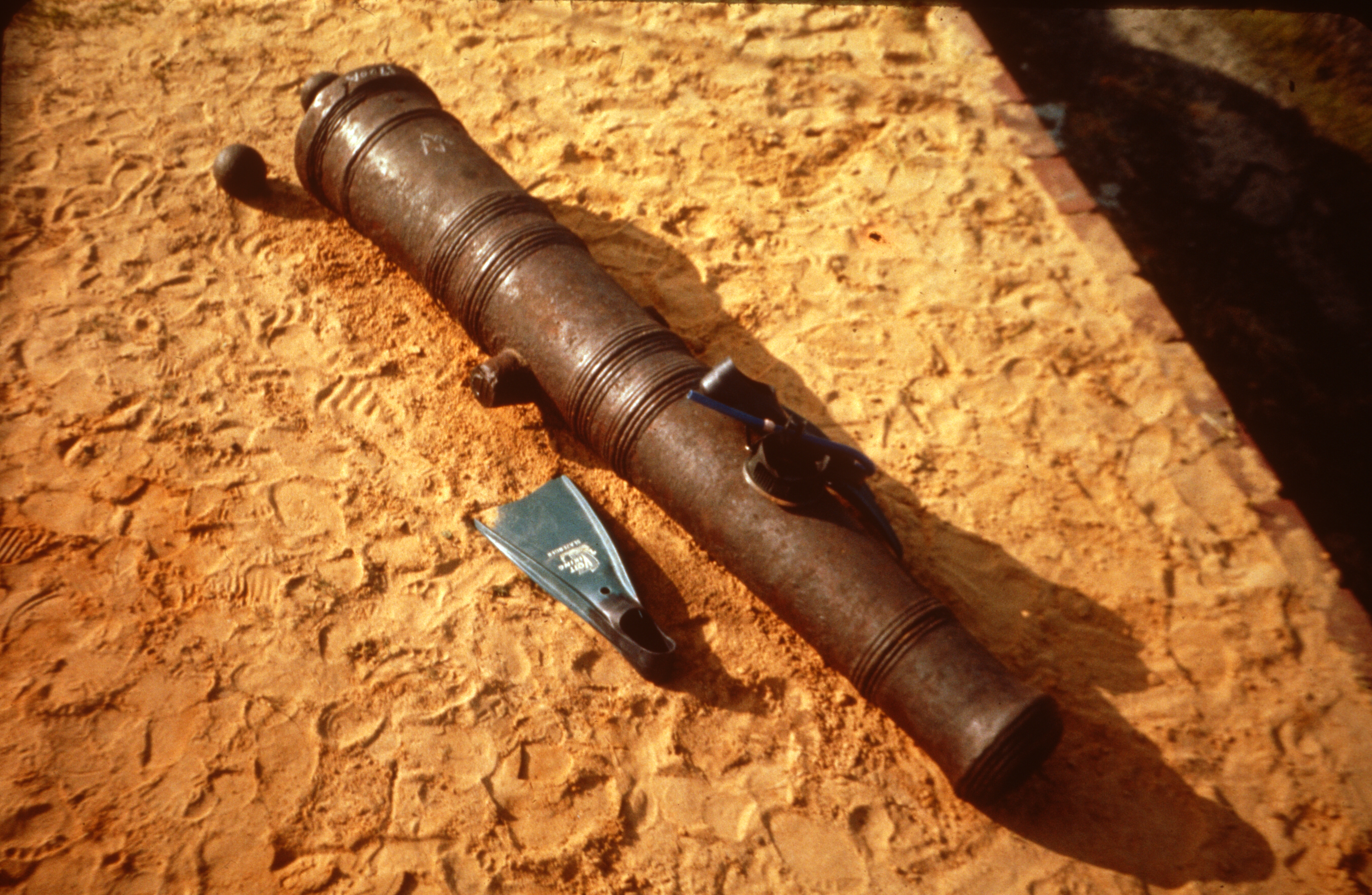
Credit: Western Australian Museum, Department of Maritime Heritage.
In 1964 three divers raised an iron cannon from the site of the wreck of the Dutch East India Company (VOC) ship Vergulde Draeck (1656). The wreck had been located just one year earlier by a group spearfishing north of Perth. This cannon is now held by the KAustralian Captial Equity (also known as the Stokes Collection, in Perth Western Australia). While no longer what you would call a prime example of a 17th-century iron cannon, it has become an example of the damage that is caused to underwater cultural heritage material when it is not treated adequately.
When the cannon was raised in 1964, it clearly showed the insignia for the Amsterdam chamber of the VOC in relief and the number ‘1700A’ on the base ring. These marks, and the other various details of the cannon, have been lost due to corrosion, revealing the heavily pitted underlying surface. Reportedly, the iron had started to visibly corrode and flake in the backyard of its finder as quickly as three months after its recovery from the sea. The Western Australia Museum holds several fragments from this cannon that are a result of this process of deterioration (GT71, GT72, GT73 and GT81).
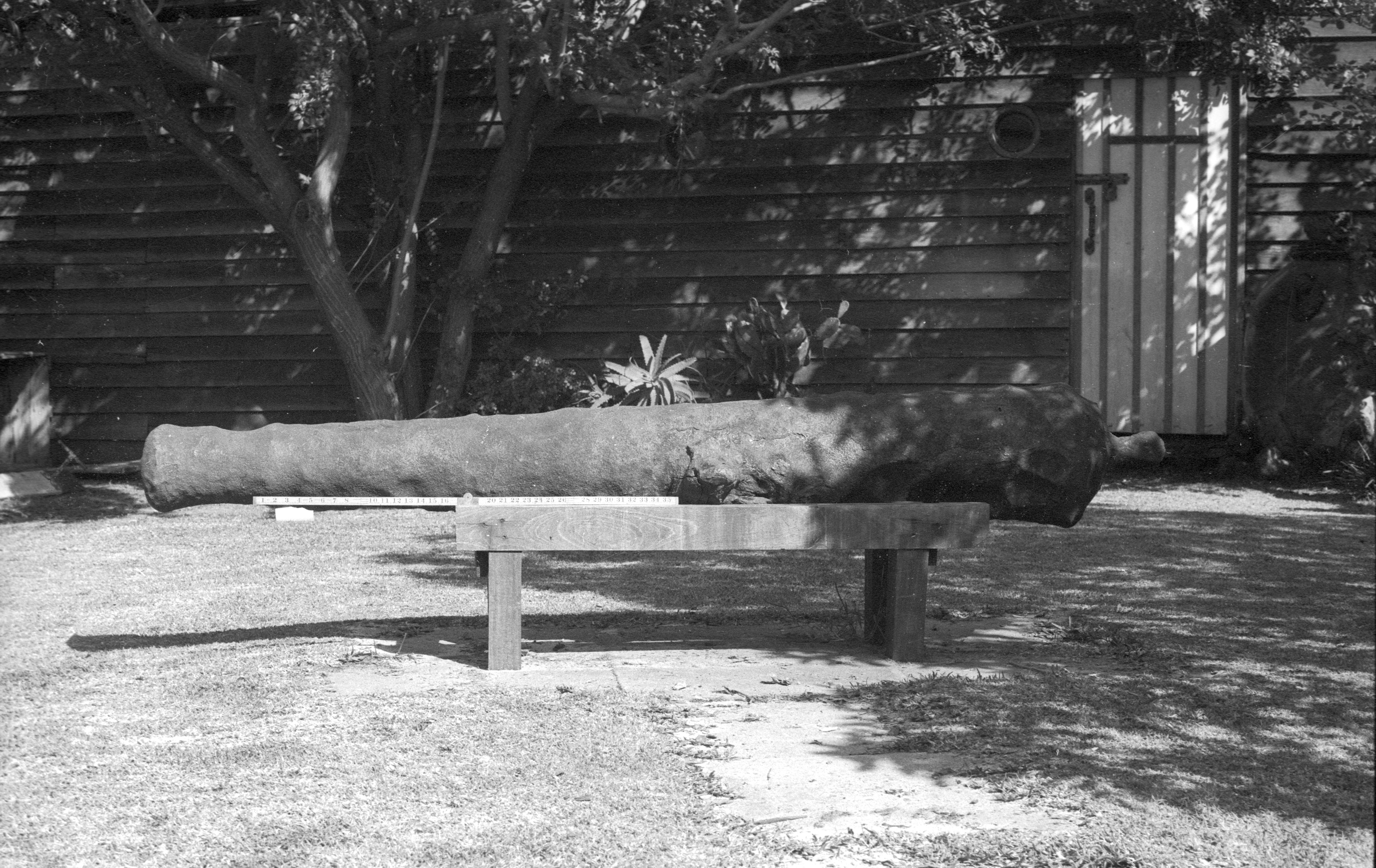
Credit: Western Australian Museum, Department of Maritime Heritage.
The cannon’s current appearance is the result of natural processes that required preventative treatment by conservators to remove corrosive salts. Unlike many other cannons that are made of bronze, Vergulde Draeck’s armament was mostly made of cast iron due to a shortage in the VOC’s arsenal at that time. Iron naturally corrodes through oxidation. Once exposed to air, the natural processes of oxidation accelerate due to the increased exposure to oxygen and the large amount of residual salt impregnating the cannon after its long immersion in the sea.
Other cannon from the sea, such as one of the cannons raised from the VOC ship Akerendam, have suffered a similar fate. Akerendam was lost off the coast of Norway in 1725 due to a storm, and the wreck was found near Runde in 1972. A 4-pounder English-cast cannon of the Borgard type marked with the insignia of the Amsterdam chamber of the VOC was raised in 1999 and put on public display at Burgers’ Zoo in Arnhem, the Netherlands. It was treated by continuous rinsing with fresh water for several months, then dried with heated nitrogen. The gun was then sealed with a coating to reduce any ongoing damage through contact with the air. Unfortunately, it became clear soon after its exhibition that the cannon was corroding: the products of expanding corrosion lifted the surface layers of the cannon, to the extent that pieces started to fall off. The conservation treatment was inappropriate and had failed. The cannon was removed from exhibition in 2002. A second cannon from the Vergulde Draeck wreck (GT1456), raised in 1970, suffered a similar failure due to inappropriate conservation.
Most underwater cultural heritage is at risk of serious deterioration after excavation if not treated carefully and conserved properly. These risks motivated the Western Australian Museum to establish a conservation laboratory in the 1970s that was primarily dedicated to the preservation of underwater cultural heritage objects, such as shipwreck cannon. Subsequently the conservation department became recognised as world leaders in the treatment of various objects from marine environments, including large ferrous objects. Despite all the progress that has been made by conservation scientists and conservators, there is still significant risk—as demonstrated by the failed treatment of the cannon from Akerendam. This is why in many instances today the safest approach for maritime objects is that they stay underwater and be monitored in situ. This is reflected in international policies regarding underwater cultural heritage, such as the ICOMOS Charter on the Protection and Management of Underwater Cultural Heritage (1996) (Article 1) and the UNESCO Convention on the Protection of the Underwater Cultural Heritage (2009) (Article 2.5).
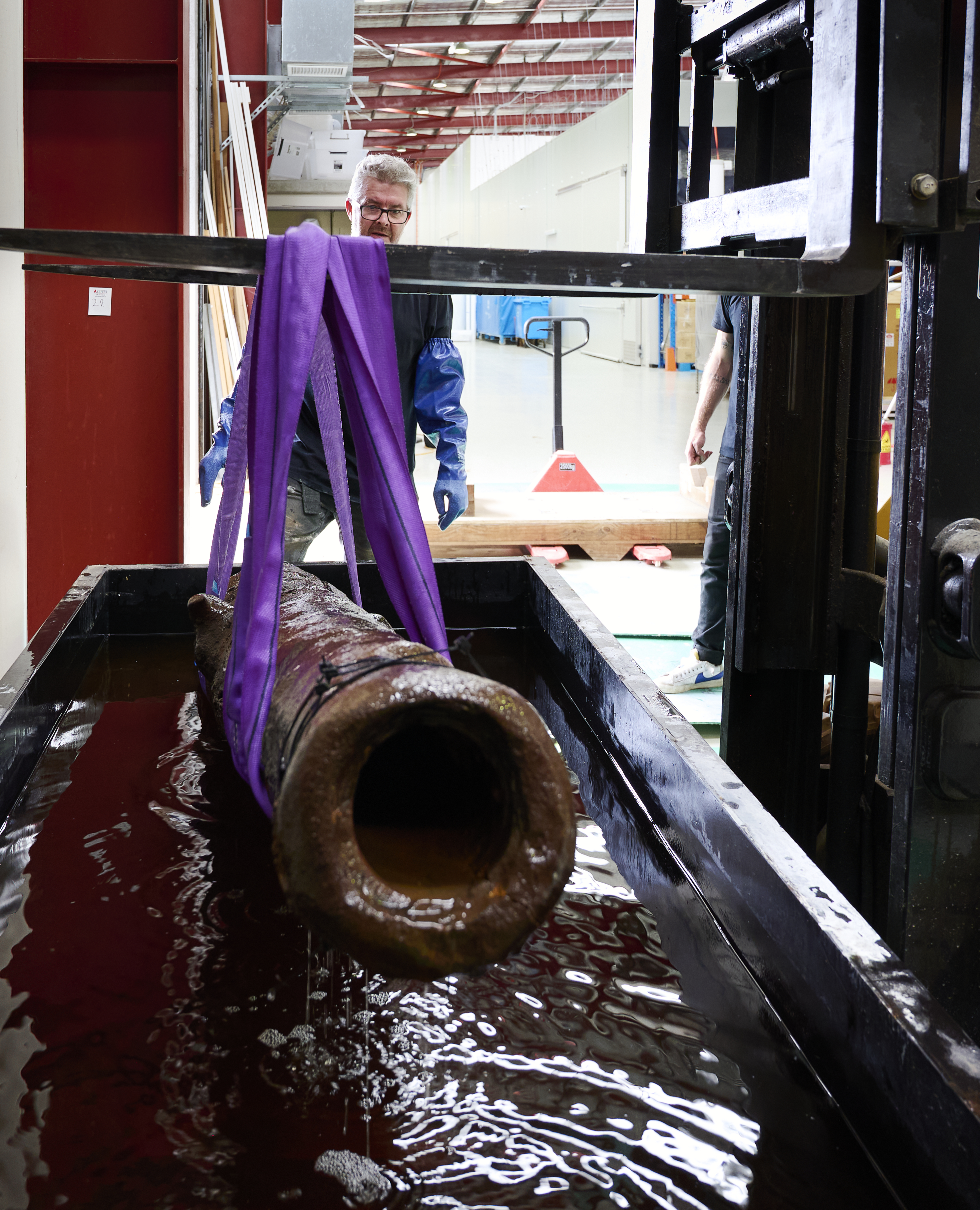
Credit: Australian Capital Equity.
The Vergulde Draeck cannon was formally declared under the 1993/1994 Historic Shipwrecks Amnesty. It is currently held by Australian Capital Equity and is undergoing conservation treatment to combat any further deterioration. The similar cannon from the same wreck, raised in 1970 (GT1456), is on exhibition at the Museum of Geraldton. The fragments collected from the corroded cannon have also been kept. Despite the corrosion these pieces preserve some diagnostic aspects of the cannon. Moreover, such items are useful for scientific analysis. Who knows what future methods of enquiry and analysis may tell us about the cannon?
References
Brinck N (2020) Kanonnen van Nederland: Nederlands geschut en andere oude kanonnen in Nederland [Guns of the Netherlands: Dutch cannon and other old guns in the Netherlands] (2nd rvsd ed.), Rijksdienst voor het Cultureel Erfgoed: 252-254.
Derksen M (2023) Akerendam Expedition, accessed 26 June 2025.
Duivenvoorde W van (2010) The Armament of Australia’s VOC Ships, Department of Maritime Archaeology Reports No. 258, Western Australia Museum.